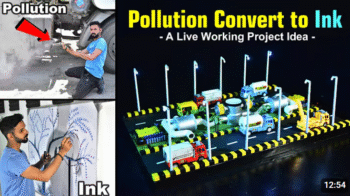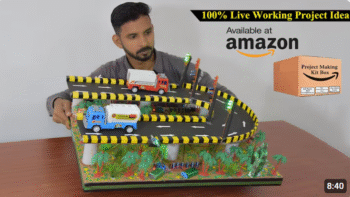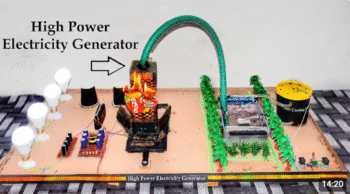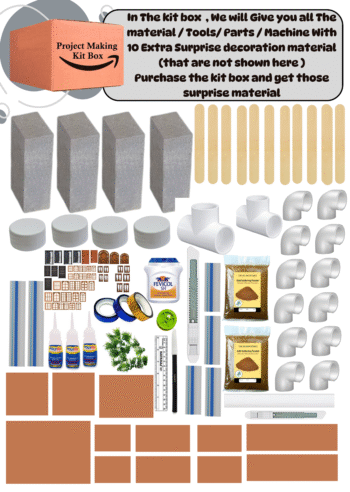
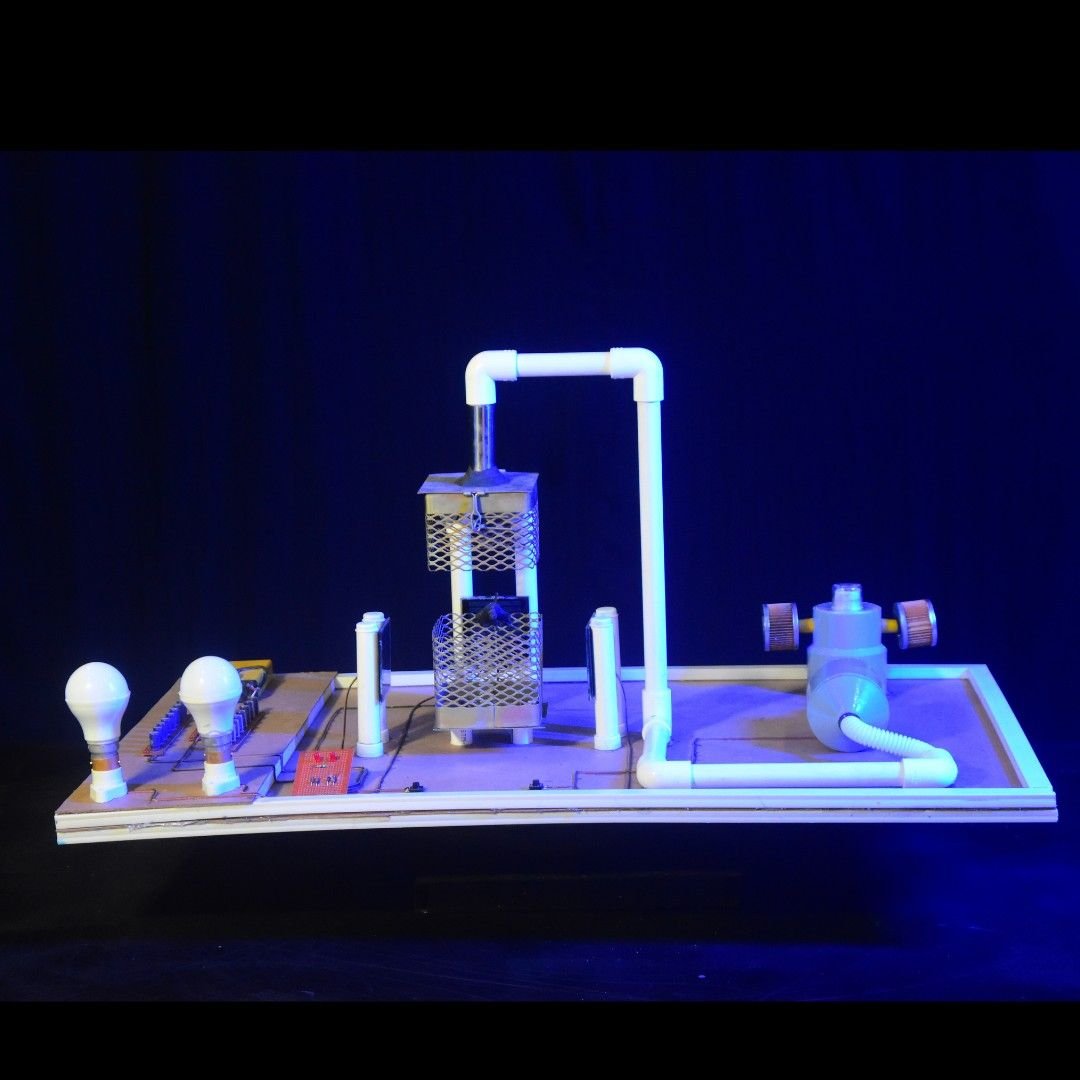
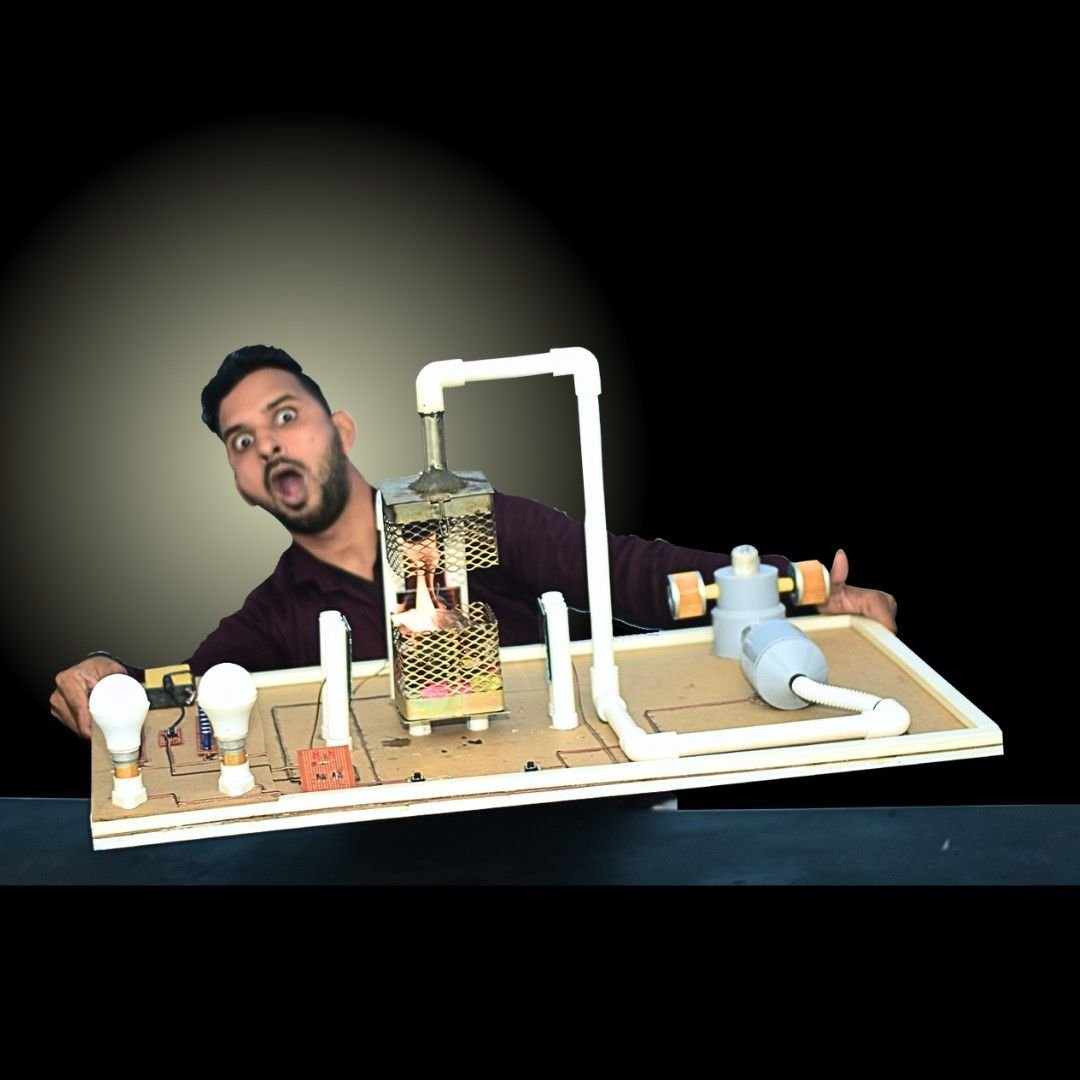


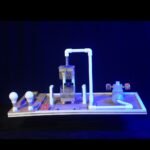


Generate Electricity by Waste Materials/Inspire Award Project Kit Box/Generate Electricity by Plastic and Pollurion Conword to Ink/Electricity from Garbage Project

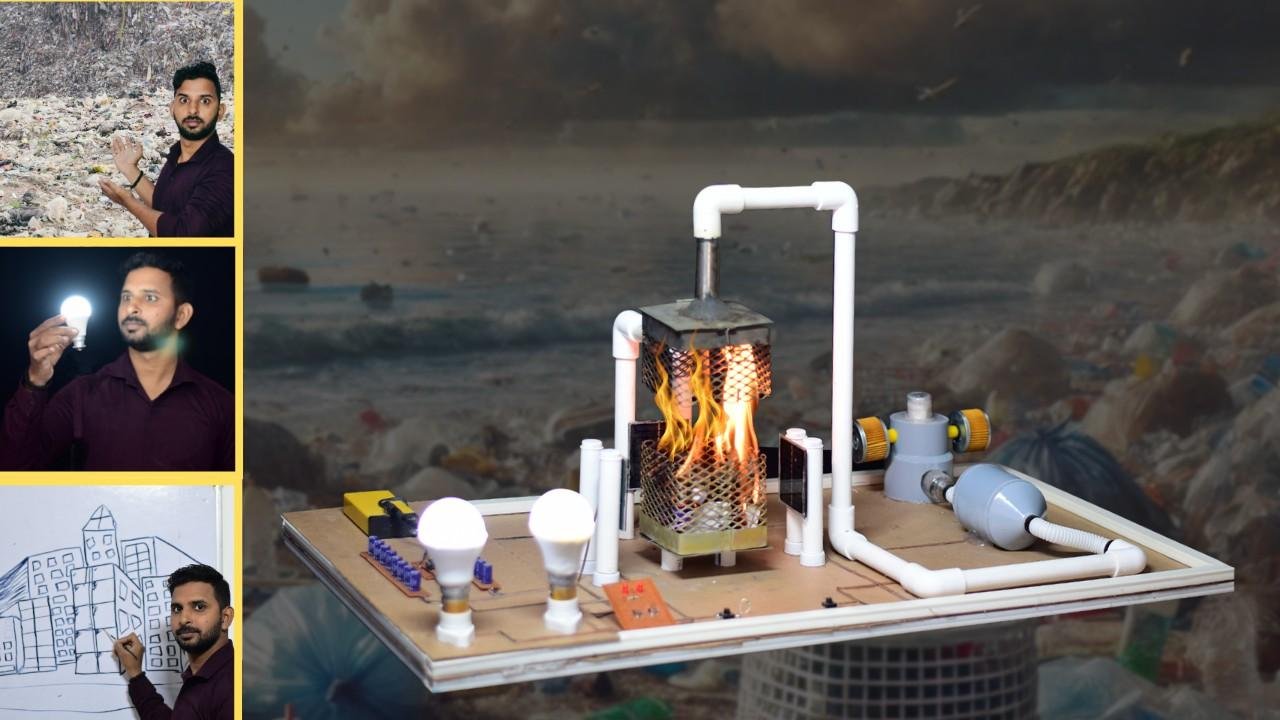
Project Key Features: Waste Plastic Bag Collection: Plastic bags, which are typically waste material, are collected to prevent them from polluting the environment.
Electricity Generation: The plastic bags are burned to generate electricity. This process contributes to renewable energy production.
Pollution Control and Ink Production: The emissions released during the burning process are filtered and treated to create high-quality ink in an eco-friendly manner.
Road Construction Using Waste Materials: Recycled plastic bags and other waste materials are used to build sustainable roads. These roads are more durable and require less maintenance than traditional roads.
Environmental Benefits: The project helps reduce environmental pollution by efficiently managing waste and generating clean energy.
Economic Value: The recycling of plastic adds economic value, benefiting local economies and creating new jobs.
Sustainable Future: The project aims to create a more sustainable and eco-friendly future, where waste is properly utilized and environmental harm is minimized.
Project Benefits: Waste Management: Efficient disposal and utilization of waste plastic bags. Energy Generation: Clean, renewable energy production. Pollution Reduction: Emissions are controlled, and ink is produced in a safer, environmentally friendly way. Cost-Effective Infrastructure: Roads built from recycled materials are cost-effective and long-lasting. Environmental Impact: Reduces carbon footprint by providing eco-friendly solutions. This project offers a new perspective on waste management and sustainability, providing positive environmental impacts while supporting economic growth.
₹4,999.00 Original price was: ₹4,999.00.₹3,750.00Current price is: ₹3,750.00.
Plastic waste has emerged as one of the most pressing environmental issues of the modern era. With global plastic production reaching unprecedented levels, improper disposal has led to severe consequences, including land and water pollution, harm to wildlife, and increased greenhouse gas emissions. Traditional waste management methods, such as burning and landfilling, are insufficient and often exacerbate the problem by releasing toxic pollutants and occupying valuable land resources.
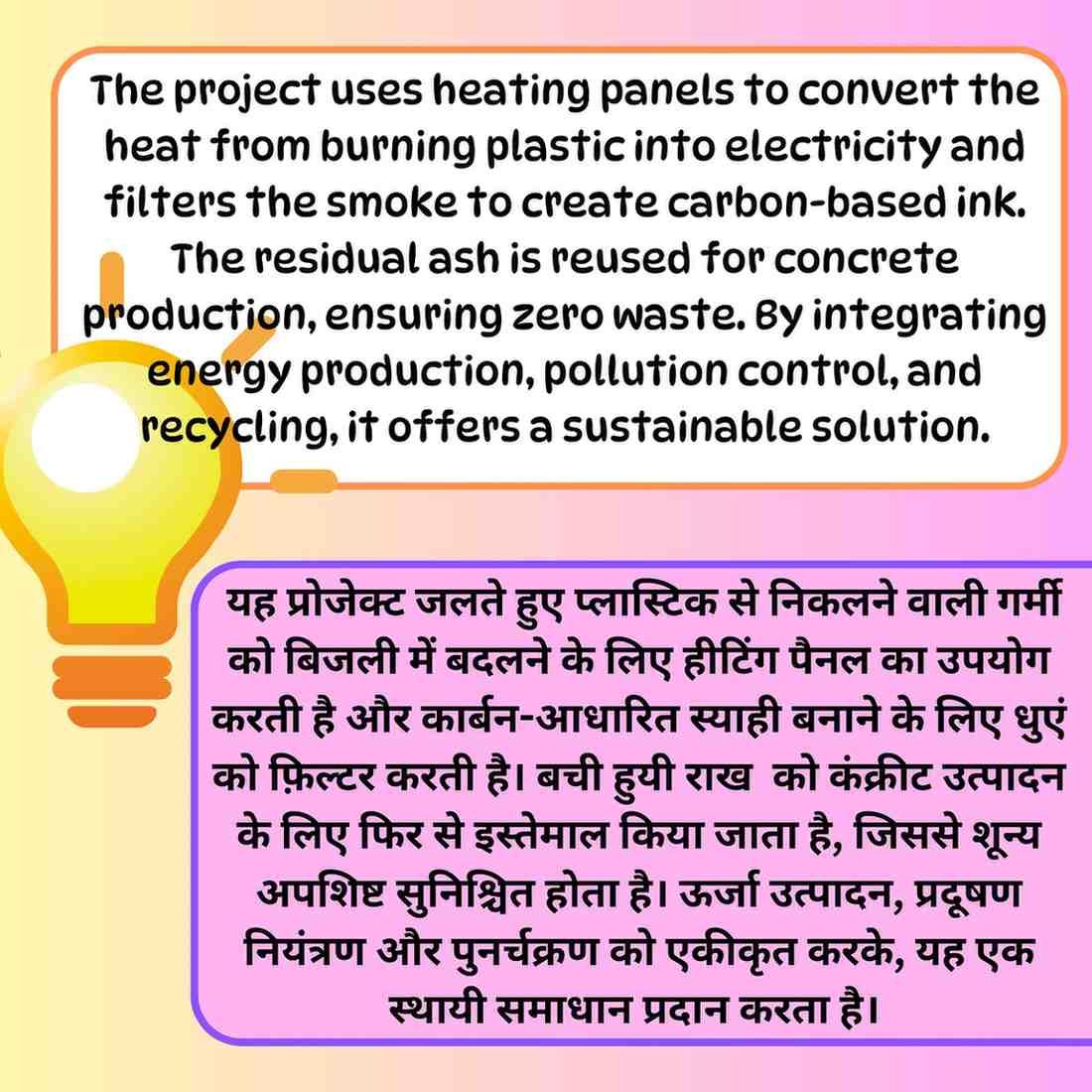
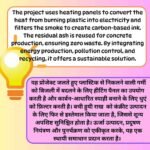
This project seeks to tackle the plastic waste crisis through an innovative and sustainable approach. By leveraging heating panels, the energy from burning plastic is harnessed and converted into electricity. Unlike conventional solar panels, these heating panels are specifically designed to efficiently capture and transform heat energy into electrical power. Furthermore, the smoke generated during the burning process is filtered using a carbon filtration system, which not only reduces harmful emissions but also repurposes the captured carbon for practical use, such as ink production.
| 5 |
|
0 |
| 4 |
|
0 |
| 3 |
|
0 |
| 2 |
|
0 |
| 1 |
|
0 |
- Accident Prevention Project
- Arduino Bluetooth Controlled Car
- Arduino Security System
- Arduino Servo Door Lock
- Automation Learning Kit
- Beginner Robotics Project
- Best Electrical Project For Final Years
- DIY Robotics Kit
- eco friendly material science project
- Electrical Project
- Electrical project for final years students
- Electricity kit
- Emerging Technology Project
- Free Energy Based Inspire Award DIY Science Project
- Free Energy Project
- Generate Electricity By Waste Materials/Inspire Award Project/Generate Electricity By Trash
- Generate Electricity By Waste Materials/Inspire Award Project Kit Box/Generate Electricity By Plastic/Electricity From Garbage Project
- Generate Electricity by Waste Materials/Inspire Award Project Kit Box/Generate Electricity by Plastic and Pollurion Conword to Ink/Electricity from Garbage Project
- Generate Electricity by Waste Materials | High Power Electricity Generator
- Home Security Using Arduino
- Inspire Award Project
- Inspire Award Project for transport and Communication
- Inspire Award Project kit
- Inspire Manak Award Project
- IoT Based Access Control
- Line Following Robot
- national winner science project
- problem-solving product
- problems faced by military
- project Kit
- Rain Proof Stadium Project / Inspire Award project / Best Electrical Project For Final Years
- RC522 RFID Module Project
- real life problem-solving projects
- Real Life Problem Solving Project
- Resources Management Project
- RFID Card Reader Arduino
- Robotic Science Kit 101+ projects 134 Parts
- Safety for wild Animal Project kit/ Best Inspire Award Project Kit
- School Science Project
- science exhibition project
- Science Project Kit
- smart speed breaker project
- speed breaker project for school
- Transmission Line Overload Protection and Overload Sharing/Electrical Engineering Project
- Transport and Communication Project
Related Products
Introduction: We have developed this project based on India’s Chandrayaan mission. This project is a part of a professional and technical campaign showcasing India’s presence in international space exploration. In this project, we have created a model based on the fundamental concepts of the Chandrayaan mission.
Objective: To mitigate air pollution by capturing vehicle emissions and converting them into usable ink.
Technology Used: Carbon filters integrated into vehicles to capture emitted smoke particles.
Conversion Process: Smoke particles trapped by filters are processed to extract carbon-based materials suitable for ink production.
The name of this project is safety helmet. Mainly work of this project is safety of a rider. We make a connection between bike and helmet by using the sensors. When rider will wear the helmet then our bike start. If the rider will not wear the helmet then bike will not start. We use the indication system in the helmet also. Indication system will show you wear the helmet properly or not. So it’s good for safety purpose and we safe it from thief also. Because without helmet bike will not start.
In this video, I demonstrate how to create a floating house using ACC blocks (Autoclaved Aerated Concrete blocks) and a cardboard house. I built the base of the house with ACC blocks, which are lightweight and float on water. When placed in a water tank, the house’s height automatically rises with the water level, preventing it from sinking. This project shows how real-life houses can be designed to stay afloat during heavy rainfall or floods, offering a solution for disaster management in flood-prone areas. The idea behind this floating house concept is to build homes that automatically adjust their height based on the rising water levels, ensuring that they do not get submerged during extreme weather conditions.
This floating house project is a great idea for those interested in science experiments, civil engineering projects, or innovative disaster management solutions. Whether you’re a student, a science enthusiast, or someone looking for unique school projects, this video will help you understand the concept of a floating house and its potential use in real life. Watch the full video to see how you can make this project at home and learn about flood-resistant house designs.
Eyes Blink Sensor: An eyes blink sensor is a device or sensor that detects and monitors the blinking of a person’s eyes. It can be used for various purposes, such as in medical applications, research studies, or even as a personal alert system. When the sensor detects that the person’s eyes are closed or blinking, it triggers a specific action or event, such as sounding an alarm.
Audible Alarm: The sensor is equipped with a sound-generating mechanism that produces an audible alarm when it detects closed or blinking eyes. This alarm sound can be a beep, chime, or any other distinct sound that alerts the user or others in the vicinity.
Safety Applications: The alarm functionality can be particularly useful in safety-critical environments, such as monitoring drivers for signs of drowsiness, operators of heavy machinery, or individuals performing tasks that require sustained focus and attention.
this project use materials name – Glass , Ir Sensor , Pcv Plate , Alarm , 1K resostor , 9v Cap , 9v Battery , Jumper Wire , Glue Road , Soldering Powder , Screwdriver
How It Works: Traffic Light Sequence: Our setup uses BC547 transistors to control the traditional red, yellow, and green traffic lights, allowing them to operate in a seamless sequence.
Blue LED Congestion Indicator: The key feature of our system is the blue LED, which lights up to indicate traffic congestion.
IR Sensor Modules: We have installed three IR sensor modules along the road. These sensors detect the presence of vehicles.
Relay Modules: Each IR sensor is connected to a relay module. When all three sensors detect vehicles simultaneously, they activate their respective relays.
Congestion Detection: Once all the relay modules are active, the blue LED lights up, indicating that the road is congested. If any one of the relay modules is inactive, it means there is space on the road, and the blue LED remains off, indicating that traffic is flowing smoothly.
Benefits: This project provides real-time traffic updates, helping drivers make informed decisions and allowing authorities to manage traffic more efficiently.
IR Sensor: The IR sensor is used to detect the presence of a vehicle. When a vehicle enters the range of the sensor, it detects its presence. Relay Module: The relay module is used to control the system. Once the IR sensor detects a vehicle, it sends a signal to the relay module, which in turn activates the LED bulb and alarm. LED Bulb: The LED bulb is used to indicate the presence of a vehicle coming from the opposite side. When a vehicle is detected by the IR sensor, the LED bulb on the other side turns on, alerting drivers. Alarm: The alarm sounds to provide a warning of the vehicle’s approach, ensuring further attention and safety. Wiring and Connections:
Working Principle: When a vehicle enters the range of the IR sensor, the sensor detects its presence. The IR sensor sends a signal to the relay module. The relay module then activates the LED bulb and alarm on the opposite side. The alarm and LED bulb warn the drivers that a vehicle is approaching.
Objectives: Enhance road safety by alerting drivers about vehicles approaching from the opposite side. Prevent traffic accidents, especially in areas with limited visibility. Create a simple and cost-effective vehicle detection system for traffic monitoring.
Expected Outcomes: Early warning system for approaching vehicles, giving drivers more time to react. Improved awareness and timely responses from drivers to avoid accidents. Efficient use of sensors and alarms to ensure smooth traffic flow and safety.
Applications: Safety alert system on narrow roads or blind spots. Traffic control at signal points or crossing areas. Monitoring vehicles in industrial areas or warehouses where safety is critical.
Future Improvements: Use of advanced sensors (e.g., ultrasonic) for better accuracy. Integration with traffic signal systems for automated control. Solar-powered systems for cost-effective outdoor applications.
Welcome to our Smart Inverter Project tutorial! In this video, we’ll show you how to build a DIY inverter that provides an automatic power backup solution for your home. If you’re looking for a continuous power supply during outages, this inverter with battery storage will keep your lights on even when the main power goes out.
This project involves creating a smart inverter circuit that can seamlessly switch from AC power to a 12V DC battery when the electricity supply is interrupted. Not only does it ensure uninterrupted power to your 230V AC appliances, but it also recharges the battery when the main power is available.
In this detailed how-to guide, we cover everything from the basic components needed to the step-by-step assembly and testing of the inverter. Plus, we’ll discuss how this inverter system can be adapted for use in transmission lines, ensuring a reliable power supply to cities from substations, even if the main transmission line fails temporarily.
What You’ll Learn in This Video:
Inverter Basics: Understand how an inverter works and the role of battery storage in providing continuous power.
Step-by-Step Construction: Follow our easy instructions to build your own inverter circuit with a 12V DC battery backup.
Automatic Switching: Learn how the inverter automatically switches to battery power during outages and back to AC power when available.
Practical Applications: Discover how this smart inverter system can be used in transmission lines to maintain city power supply during disruptions.
It has been shown in this project that if the driver tries to sleep, as soon as he closes his eyes for more than 3 seconds, an alarm will start ringing which will make him open his eyes and if he still does not open his eyes, after that driver vehicle automatic stop and water will splash on his face which will open his eyes and then he will not try to sleep again.
Health + Electricity Generation – Combines fitness with energy savings.
Made from Cardboard – Low-cost and eco-friendly DIY model.
Uses a Dynamo Motor – Pedaling turns mechanical energy into electricity.
Inverter Battery Charging – Just 15 minutes of cycling daily can charge your home inverter up to 40–50%.
Reduces Electricity Bill – Can help cut down your power costs by up to 50%
Perfect for Home Use – Easy to set up and use regularly.
Eco-Friendly Solution – Promotes green energy and reduces carbon footprint.
Great for Science Fairs & School Projects – A unique mix of innovation and education.
Boosts Motivation – Provides instant results to keep users motivated to cycle daily.
Step Toward Renewable Energy – Inspires sustainable living and self-reliance.
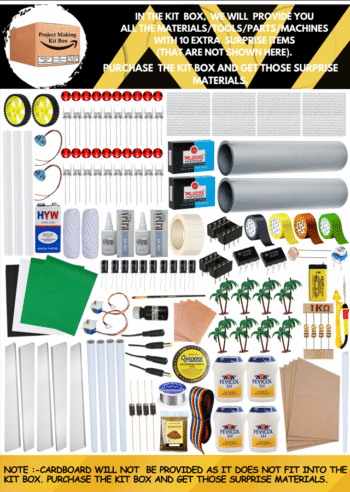
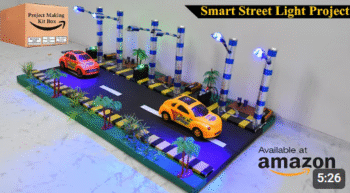
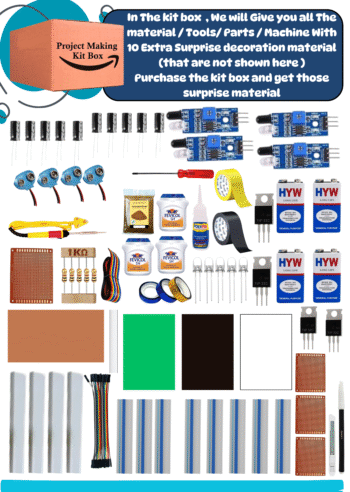
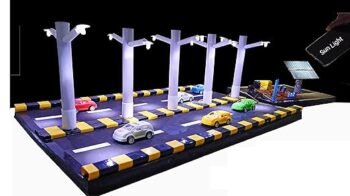
Smart Street Light project
Automatic Street Light project kit Box
IR Sensor Street Light Project Kit Box
Inspire Award Project Kit Box
Street Light Project


Reviews
There are no reviews yet.