
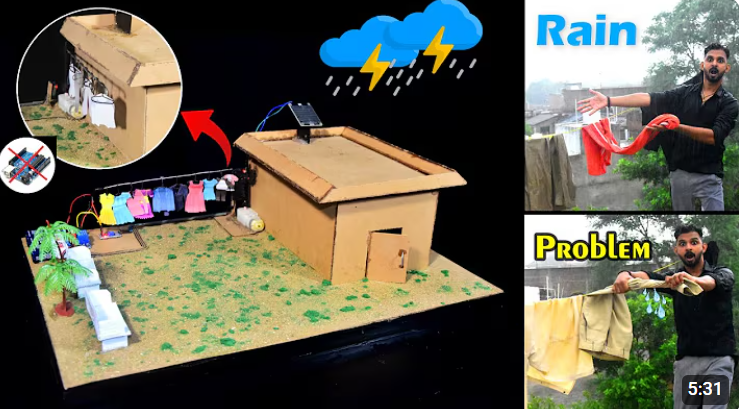


Automatic Rain Detection Smart Roof For Cloth Protection/Rain sensor DIY project/Rain Sensor Project


Learn how to build an automatic clothes drying system that responds to rain! In this project, we connect a rain-sensing module to a relay module, which activates a motor to move clothes indoors when it starts raining and back out when the rain stops. Perfect for keeping your laundry safe from unexpected showers. Ideal for DIY enthusiasts, smart home projects, and anyone looking to automate daily chores. Watch now to see how easily you can set up this rain-activated clothes drying system.
Original price was: ₹2,499.00.₹1,950.00Current price is: ₹1,950.00.
The art of drying clothes has seen minimal innovation over the centuries. Traditionally, people rely on the weather forecast and manual effort to adjust clothes on a drying rack. However, with unpredictable weather patterns, this often leads to clothes getting soaked during unexpected rain showers, causing inconvenience and additional labor.
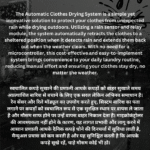
The Automatic Clothes Drying System offers an innovative solution to this problem by leveraging simple electronic components like a rain sensor and relay module. The system operates automatically without the need for a microcontroller, making it cost-effective and easy to implement. When rain is detected, the clothes rack automatically retracts to a sheltered position, preventing clothes from getting wet. Once the weathe…
Related Products
Smart Street Light project
Automatic Street Light project kit Box
IR Sensor Street Light Project Kit Box
Inspire Award Project Kit Box
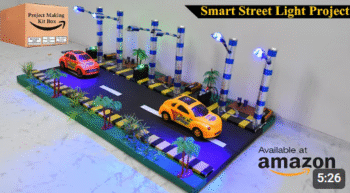
Street Light Project
Design and Operation: VAWTs typically consist of two or more blades that rotate around a vertical axis. The blades can have different shapes, such as straight, helical, or S-shaped, and are attached to a central shaft. As the wind blows, the blades capture the kinetic energy and convert it into mechanical rotation, which can then be used to generate electricity through a generator or to perform other tasks directly.

Introduction: We have developed this project based on India’s Chandrayaan mission. This project is a part of a professional and technical campaign showcasing India’s presence in international space exploration. In this project, we have created a model based on the fundamental concepts of the Chandrayaan mission.
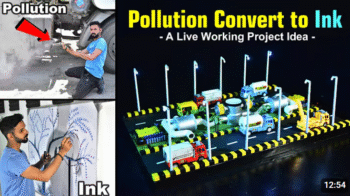
Objective: To mitigate air pollution by capturing vehicle emissions and converting them into usable ink.
Technology Used: Carbon filters integrated into vehicles to capture emitted smoke particles.
Conversion Process: Smoke particles trapped by filters are processed to extract carbon-based materials suitable for ink production.
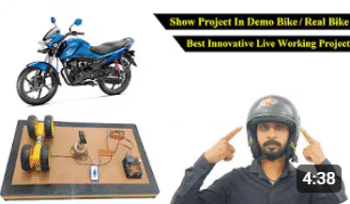
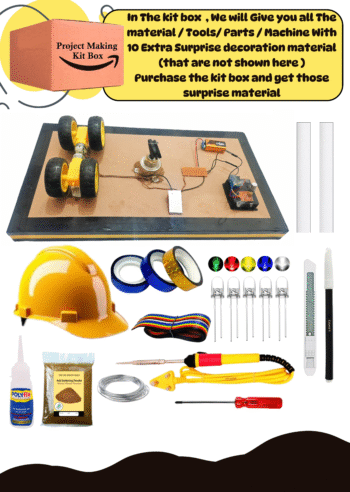
The name of this project is safety helmet. Mainly work of this project is safety of a rider. We make a connection between bike and helmet by using the sensors. When rider will wear the helmet then our bike start. If the rider will not wear the helmet then bike will not start. We use the indication system in the helmet also. Indication system will show you wear the helmet properly or not. So it’s good for safety purpose and we safe it from thief also. Because without helmet bike will not start.
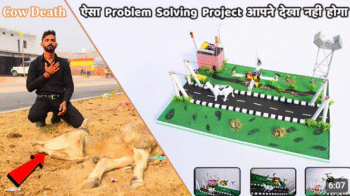
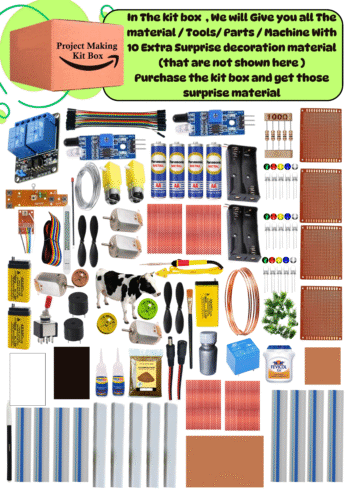
The Cow Drone Safety system is a cutting-edge technology designed to improve the safety and well-being of cattle on farms. By utilizing drones equipped with advanced sensors and monitoring capabilities, this system aims to revolutionize the way farmers manage their livestock. In this project, we will explore the design, functionality, and potential benefits of the Cow Drone Safety system.
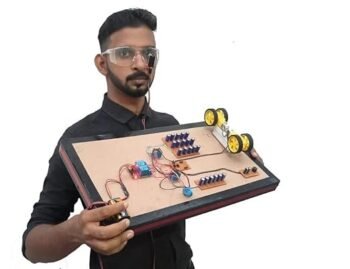
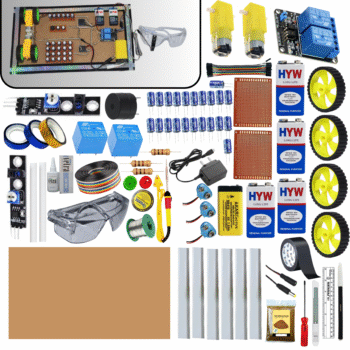
Eyes Blink Sensor: An eyes blink sensor is a device or sensor that detects and monitors the blinking of a person’s eyes. It can be used for various purposes, such as in medical applications, research studies, or even as a personal alert system. When the sensor detects that the person’s eyes are closed or blinking, it triggers a specific action or event, such as sounding an alarm.
Audible Alarm: The sensor is equipped with a sound-generating mechanism that produces an audible alarm when it detects closed or blinking eyes. This alarm sound can be a beep, chime, or any other distinct sound that alerts the user or others in the vicinity.
Safety Applications: The alarm functionality can be particularly useful in safety-critical environments, such as monitoring drivers for signs of drowsiness, operators of heavy machinery, or individuals performing tasks that require sustained focus and attention.
this project use materials name – Glass , Ir Sensor , Pcv Plate , Alarm , 1K resostor , 9v Cap , 9v Battery , Jumper Wire , Glue Road , Soldering Powder , Screwdriver

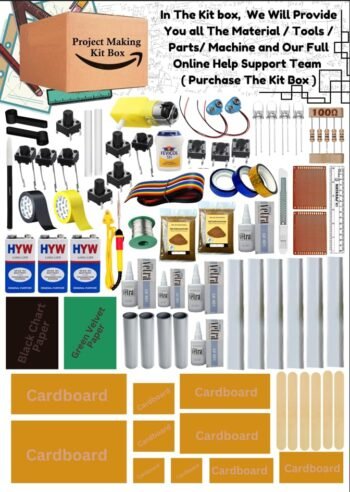


In this video, I demonstrate how to create a floating house using ACC blocks (Autoclaved Aerated Concrete blocks) and a cardboard house. I built the base of the house with ACC blocks, which are lightweight and float on water. When placed in a water tank, the house’s height automatically rises with the water level, preventing it from sinking. This project shows how real-life houses can be designed to stay afloat during heavy rainfall or floods, offering a solution for disaster management in flood-prone areas. The idea behind this floating house concept is to build homes that automatically adjust their height based on the rising water levels, ensuring that they do not get submerged during extreme weather conditions.
This floating house project is a great idea for those interested in science experiments, civil engineering projects, or innovative disaster management solutions. Whether you’re a student, a science enthusiast, or someone looking for unique school projects, this video will help you understand the concept of a floating house and its potential use in real life. Watch the full video to see how you can make this project at home and learn about flood-resistant house designs.
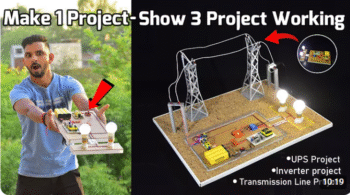
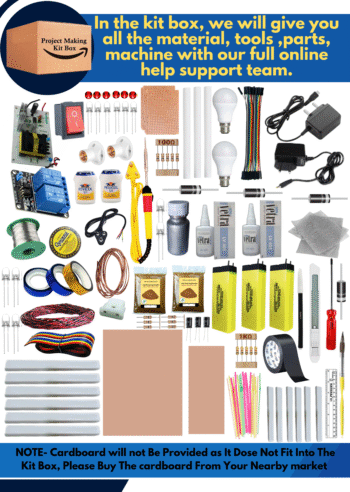
Welcome to our Smart Inverter Project tutorial! In this video, we’ll show you how to build a DIY inverter that provides an automatic power backup solution for your home. If you’re looking for a continuous power supply during outages, this inverter with battery storage will keep your lights on even when the main power goes out.
This project involves creating a smart inverter circuit that can seamlessly switch from AC power to a 12V DC battery when the electricity supply is interrupted. Not only does it ensure uninterrupted power to your 230V AC appliances, but it also recharges the battery when the main power is available.
In this detailed how-to guide, we cover everything from the basic components needed to the step-by-step assembly and testing of the inverter. Plus, we’ll discuss how this inverter system can be adapted for use in transmission lines, ensuring a reliable power supply to cities from substations, even if the main transmission line fails temporarily.
What You’ll Learn in This Video:
Inverter Basics: Understand how an inverter works and the role of battery storage in providing continuous power.
Step-by-Step Construction: Follow our easy instructions to build your own inverter circuit with a 12V DC battery backup.
Automatic Switching: Learn how the inverter automatically switches to battery power during outages and back to AC power when available.
Practical Applications: Discover how this smart inverter system can be used in transmission lines to maintain city power supply during disruptions.
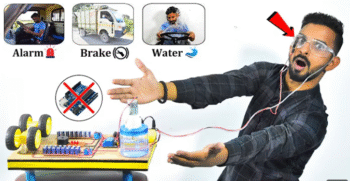
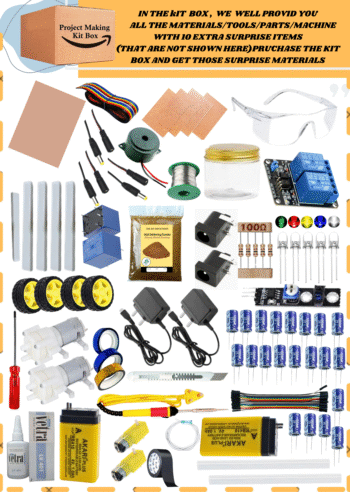
It has been shown in this project that if the driver tries to sleep, as soon as he closes his eyes for more than 3 seconds, an alarm will start ringing which will make him open his eyes and if he still does not open his eyes, after that driver vehicle automatic stop and water will splash on his face which will open his eyes and then he will not try to sleep again.

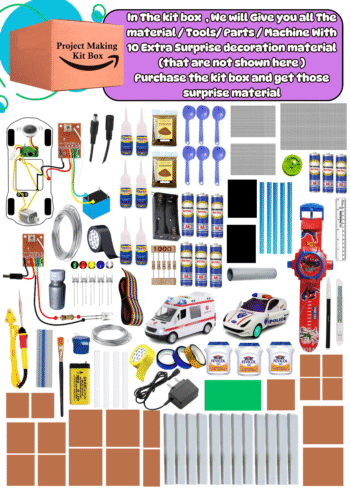
This DIY project features a wearable watch with an RC transmitter that sends emergency signals to the nearest police car, triggering an alarm and red light for immediate response. Perfect for school projects, engineering experiments, DIY enthusiasts, and Inspire Awards. Watch now to see how this low-cost, localized system ensures quick action in emergencies and enhances women’s safety.
Reviews
There are no reviews yet.