



Train Accident Prevention Science Project/ Inspire award Project

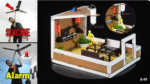
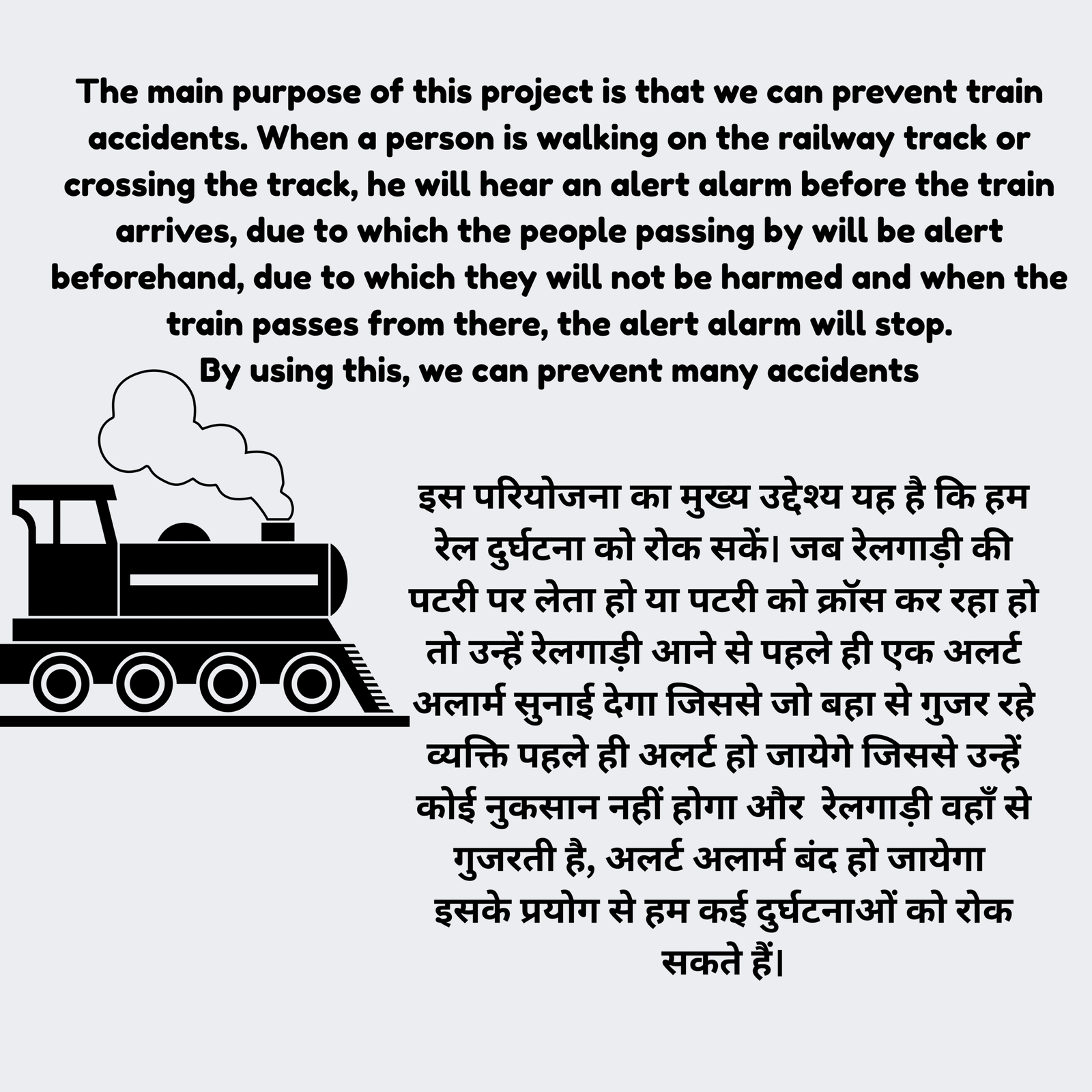
The main purpose of this project is that we can prevent train accidents. When a person is walking on the railway track or crossing the track, he will hear an alert alarm before the train arrives, due to which the people passing by will be alert beforehand, due to which they will not be harmed and when the train passes from there, the alert alarm will stop.
By using this, we can prevent many accidents
Original price was: ₹4,999.00.₹3,900.00Current price is: ₹3,900.00.
The main purpose of this project is that we can prevent train accidents. When a person is walking on the railway track or crossing the track, he will hear an alert alarm before the train arrives, due to which the people passing by will be alert beforehand, due to which they will not be harmed and when the train passes from there, the alert alarm will stop.
By using this, we can prevent many accidents
Related Products
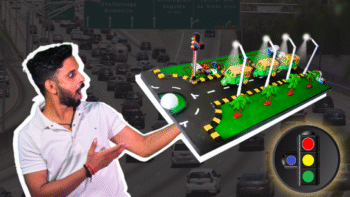

How It Works: Traffic Light Sequence: Our setup uses BC547 transistors to control the traditional red, yellow, and green traffic lights, allowing them to operate in a seamless sequence.
Blue LED Congestion Indicator: The key feature of our system is the blue LED, which lights up to indicate traffic congestion.
IR Sensor Modules: We have installed three IR sensor modules along the road. These sensors detect the presence of vehicles.
Relay Modules: Each IR sensor is connected to a relay module. When all three sensors detect vehicles simultaneously, they activate their respective relays.
Congestion Detection: Once all the relay modules are active, the blue LED lights up, indicating that the road is congested. If any one of the relay modules is inactive, it means there is space on the road, and the blue LED remains off, indicating that traffic is flowing smoothly.
Benefits: This project provides real-time traffic updates, helping drivers make informed decisions and allowing authorities to manage traffic more efficiently.
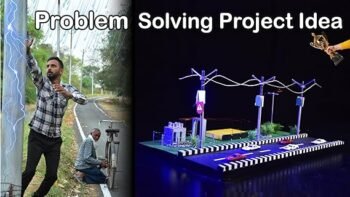
The Problem: Electrical poles, being integral components of power distribution networks, are susceptible to various faults, including short circuits. These faults pose significant dangers to both nearby individuals and the infrastructure itself. However, identifying when a pole is experiencing a fault, especially during adverse weather conditions like rain, can be challenging.
The Solution: Our project introduces a visual indicator system designed to promptly notify observers when a fault occurs in an electrical pole. This system consists of a small strip affixed to the pole, divided into two distinct colors: green and red. During normal operating conditions, when no fault is present, the strip remains green, indicating that the pole is functioning safely. However, when a fault such as a short circuit occurs, the strip promptly changes its color from green to red, si
How it Works: The indicator strip is equipped with sensors capable of detecting abnormal electrical activity, such as an increase in current flow due to a short circuit. Upon detecting such an anomaly, the sensor triggers the color change mechanism, causing the strip to transition from green to red. This visual change serves as an immediate warning sign to anyone in the vicinity that the pole is experiencing a fault and should be avoided.
Benefits: Enhanced Safety: By providing a clear visual indication of faults, the system helps prevent accidents and injuries caused by inadvertent contact with electrified poles. Timely Response: Prompt identification of faults enables swift corrective action, minimizing downtime and potential damage to the electrical infrastructure. User-Friendly: The simplicity of the color-changing indicator strip ensures that it is easily understandable by individuals of all backgrounds and levels of expert
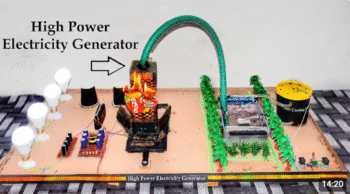

Generate Electricity By Waste Materials
Inspire Award Project Kit Box
Generate Electricity By Plastic
Electrical Engineering Project Kit Box
Free Energy Project Kit Box

Design and Operation: VAWTs typically consist of two or more blades that rotate around a vertical axis. The blades can have different shapes, such as straight, helical, or S-shaped, and are attached to a central shaft. As the wind blows, the blades capture the kinetic energy and convert it into mechanical rotation, which can then be used to generate electricity through a generator or to perform other tasks directly.

Health + Electricity Generation – Combines fitness with energy savings.
Made from Cardboard – Low-cost and eco-friendly DIY model.
Uses a Dynamo Motor – Pedaling turns mechanical energy into electricity.
Inverter Battery Charging – Just 15 minutes of cycling daily can charge your home inverter up to 40–50%.
Reduces Electricity Bill – Can help cut down your power costs by up to 50%
Perfect for Home Use – Easy to set up and use regularly.
Eco-Friendly Solution – Promotes green energy and reduces carbon footprint.
Great for Science Fairs & School Projects – A unique mix of innovation and education.
Boosts Motivation – Provides instant results to keep users motivated to cycle daily.
Step Toward Renewable Energy – Inspires sustainable living and self-reliance.

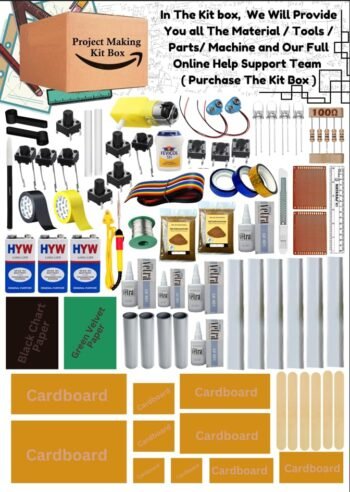
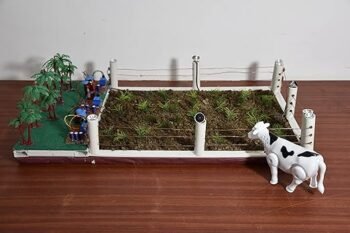
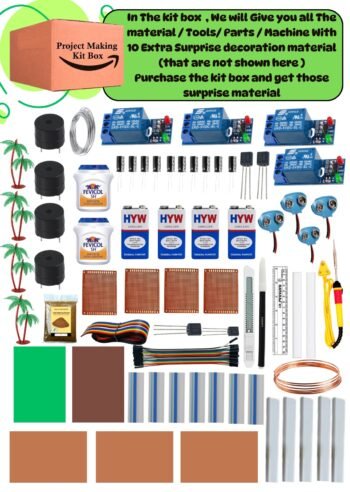
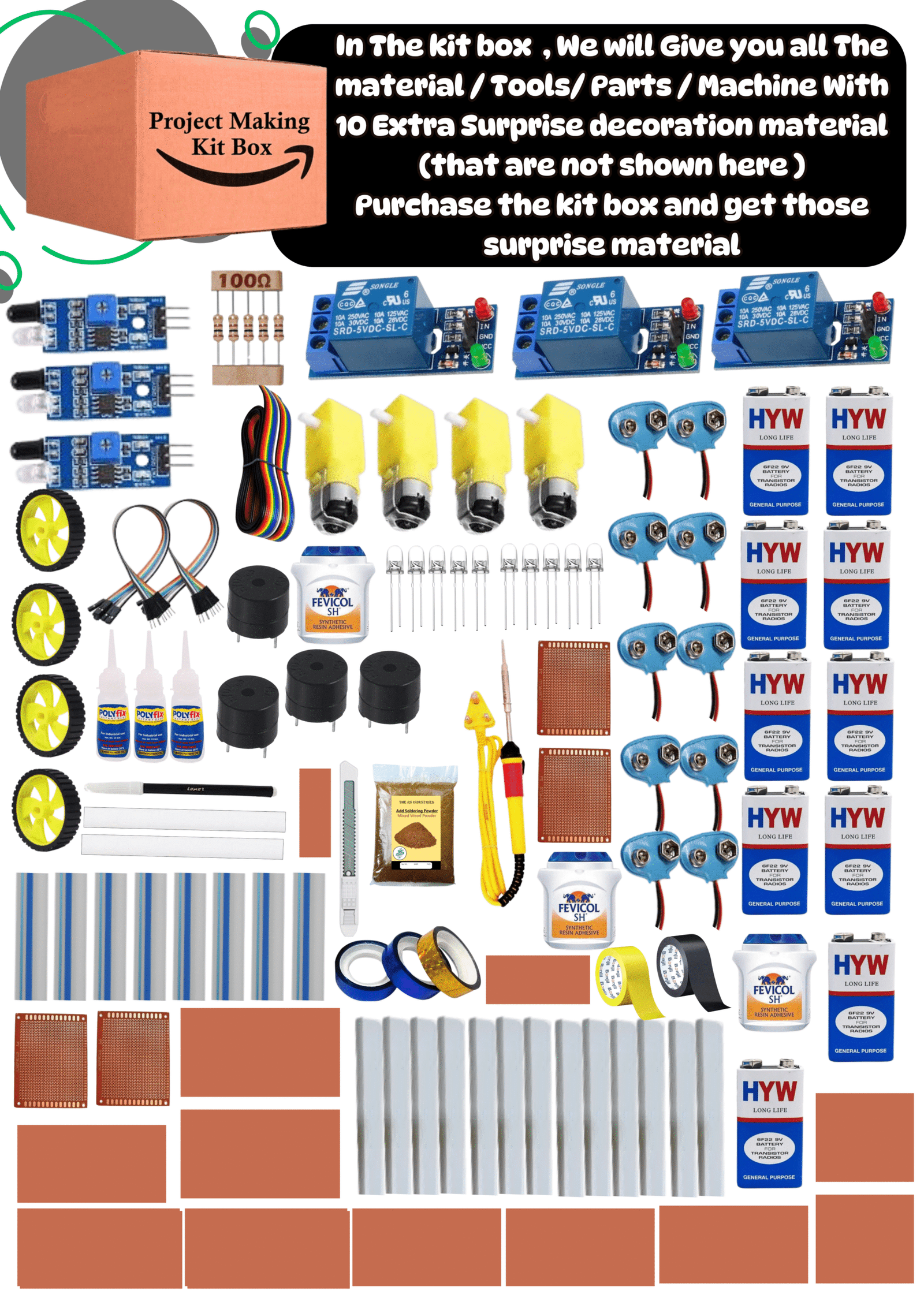
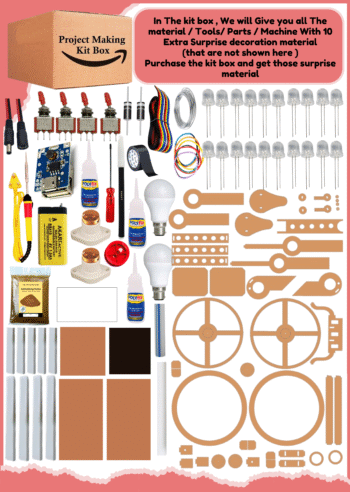
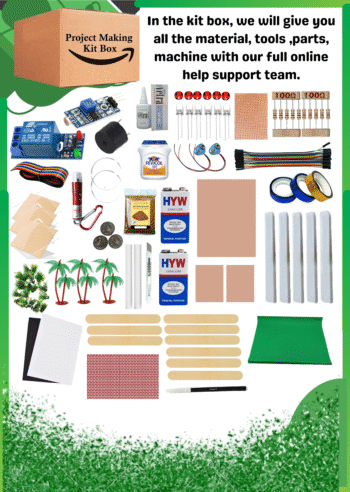
In this project kit box we will give you all components and parts , Extra decoration materials , How to make full step by step video and 3D circuit diagram , Reading pages , Synopsis file , Online training access There will be more wires around the field wall , The direction from which the animals are entering the fields, then on coming in touch with the wire which is around, the alarm will start sounding from the same direction, so that the animal will feel that someone is coming and he will run away due to which the farmer is not in the fields. There will be safety and there will be no harm to the farms and animals. So If farmer go to out side of field then his crop save by animal Best Part Of This Project , It’s System Making Cost Very Low Any Farmer Can buy or Make Himself And Use In Field .
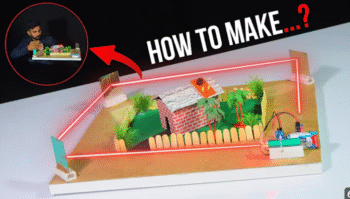
How It Works: Laser Beam Setup: A laser torch emits a beam that travels across the area by reflecting off three strategically placed mirrors (glasses). This configuration creates a continuous laser barrier around the perimeter of a model house or any area you wish to secure.
LDR Detection: The laser beam ultimately hits an LDR module, which is sensitive to light. As long as the laser beam is unbroken and falls on the LDR, the system remains in a passive state, with no alarm triggered.
Relay and Buzzer Activation: The LDR is connected to a single-channel relay module that controls a 9V buzzer. If the laser beam is interrupted, the LDR detects a change in light intensity, signaling the relay to activate the buzzer. This results in an audible alarm that warns you of the potential intrusion.
Unauthorized Entry Alert: The alarm is designed to activate whenever there is an obstruction in the laser path, such as someone entering the secured area without permission. This feature provides a simple yet effective means of safeguarding your space.
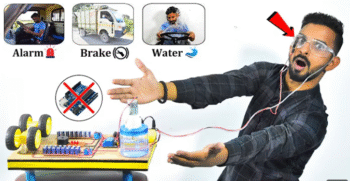
It has been shown in this project that if the driver tries to sleep, as soon as he closes his eyes for more than 3 seconds, an alarm will start ringing which will make him open his eyes and if he still does not open his eyes, after that driver vehicle automatic stop and water will splash on his face which will open his eyes and then he will not try to sleep again.
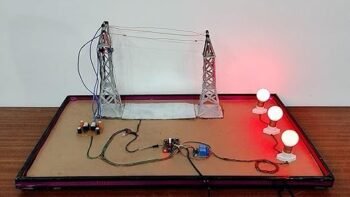

Transmission Line Fault Detection Project
Electrical Engineering Project Making Kit Box
Fault Detection In Transmission Line Project
Line To Ground Fault Detection
Three Phase Transmission Line Fault Detection Project
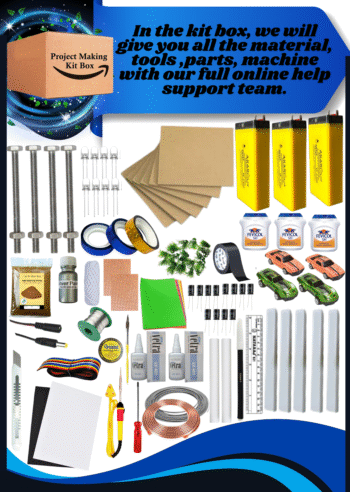
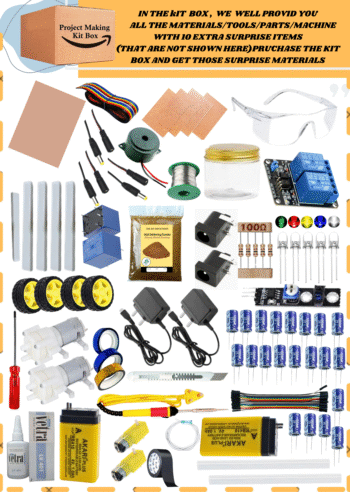
In This Project Kit Box We will Give You Only All Components And Parts And Extra Decoration Materials And Step By Step Videos 3D Circuit Diagram And Reading Pages With Synopsis File And Online Training Access

IR Sensor: The IR sensor is used to detect the presence of a vehicle. When a vehicle enters the range of the sensor, it detects its presence. Relay Module: The relay module is used to control the system. Once the IR sensor detects a vehicle, it sends a signal to the relay module, which in turn activates the LED bulb and alarm. LED Bulb: The LED bulb is used to indicate the presence of a vehicle coming from the opposite side. When a vehicle is detected by the IR sensor, the LED bulb on the other side turns on, alerting drivers. Alarm: The alarm sounds to provide a warning of the vehicle’s approach, ensuring further attention and safety. Wiring and Connections:
Working Principle: When a vehicle enters the range of the IR sensor, the sensor detects its presence. The IR sensor sends a signal to the relay module. The relay module then activates the LED bulb and alarm on the opposite side. The alarm and LED bulb warn the drivers that a vehicle is approaching.
Objectives: Enhance road safety by alerting drivers about vehicles approaching from the opposite side. Prevent traffic accidents, especially in areas with limited visibility. Create a simple and cost-effective vehicle detection system for traffic monitoring.
Expected Outcomes: Early warning system for approaching vehicles, giving drivers more time to react. Improved awareness and timely responses from drivers to avoid accidents. Efficient use of sensors and alarms to ensure smooth traffic flow and safety.
Applications: Safety alert system on narrow roads or blind spots. Traffic control at signal points or crossing areas. Monitoring vehicles in industrial areas or warehouses where safety is critical.
Future Improvements: Use of advanced sensors (e.g., ultrasonic) for better accuracy. Integration with traffic signal systems for automated control. Solar-powered systems for cost-effective outdoor applications.


In this video, I demonstrate how to create a floating house using ACC blocks (Autoclaved Aerated Concrete blocks) and a cardboard house. I built the base of the house with ACC blocks, which are lightweight and float on water. When placed in a water tank, the house’s height automatically rises with the water level, preventing it from sinking. This project shows how real-life houses can be designed to stay afloat during heavy rainfall or floods, offering a solution for disaster management in flood-prone areas. The idea behind this floating house concept is to build homes that automatically adjust their height based on the rising water levels, ensuring that they do not get submerged during extreme weather conditions.
This floating house project is a great idea for those interested in science experiments, civil engineering projects, or innovative disaster management solutions. Whether you’re a student, a science enthusiast, or someone looking for unique school projects, this video will help you understand the concept of a floating house and its potential use in real life. Watch the full video to see how you can make this project at home and learn about flood-resistant house designs.
Reviews
There are no reviews yet.